September 22, 2026
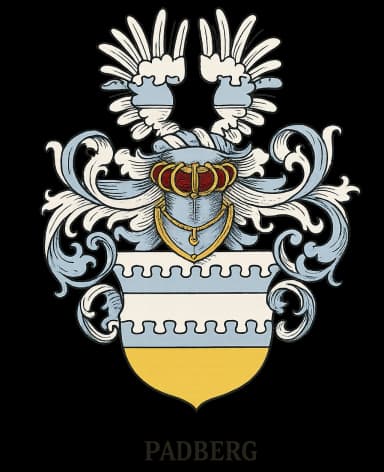
Beginning in the mid-1800s the ownership of much of the extensive Padberg estates was sold to the Droste Zu Vischering family of Darfield, Germany. Darfield, like the village of Padberg, is located in the German state of North Rhine-Westphalia. And similarly, the noble family of counts of Droste Zu Vischering existed since the Middle Ages.
Max Franz von Droste Zu Vischering married Regina Dorothea Maria Francisca von Padberg in 1802. Regina was the last Padberg in the noble line of the Old House. Regina and Max had six children, four sons and two daughters. Regina died in 1814. Max died in 1845. Their fifth child and third son, Caspar Maxmilian (1807 – 1887) followed in his father Max’s position as administrator of the county Brilon. Caspar had serious financial difficulties. To pay his debts he sold a large portion of the Padberg estates which he inherited from his mother, Regina, to his cousin, Count Wilhelm Emanuel Heidenreich Droste Zu Vischering. Count Wilhelm’s descendants continued to live in Padberg and today the widow of Wilhelm’s oldest grandson lives in the old manor house.
One of the most famous descendants in the Droste Zu Vischering line and a distant cousin of the descendants of Max Franze and Regina was Maria Droste Zu Vischering. Maria was born September 8, 1863, to Count Clemens-Heidenreich Droste Zu Vischering and Helen von Galen. Maria spent her childhood in the family castle at Darfield. In 1879 she began attending a boarding school founded by St. Madeleine Sophie Barat and run by the order, Sacre Coeur Sisters or, as the order is known in the United States, the Religious of the Sacred Heart. While studying there she felt a call to religious life. In 1888 she entered the Congregation of Our Lady of Charity of the Good Shepherd and took the name Sr. Mary of the Divine Heart.
Sr. Mary had a deep devotion to the Sacred Heart of Jesus and the Blessed Eucharist. In 1896, she became Mother Superior of a convent of the Sisters of the Good Shepherds in Porto, Portugal, which ran a shelter for homeless girls. During that time she said she had a vision, receiving divine instructions to ask Pope Leo XIII to consecrate the world to the Sacred Heart. A short time after making that request of the pope, Sr. Mary made a second request that the first Friday of each month be observed in honor of the Sacred Heart. Pope Leo was initially hesitant. But on June 11, 1899, he issued the encyclical Annum Sacrum consecrating the world to the Sacred Heart of Jesus. Sr. Mary died three days before the encyclical was issued, on June 8, 1899, three months before her thirty-sixth birthday. She had been suffering for three years with myelitis, inflammation of the spinal cord, also known at the time as tuberculosis of the spinal cord.
In 1964, Pope Paul VI declared Sr. Mary of the Divine Heart venerable. To venerate an individual in the Catholic Church is to declare the person a ‘servant of god’ who lived a heroically virtuous life. On the Feast of All Saints, November 1, 1975, Sr. Mary’s heroic virtue was further acknowledged. She was beatified by Pope Paul VI. Beatification is a step toward sainthood and it allows public veneration of the individual. Sr. Mary’s incorrupt body is exposed for veneration in the Church of the Sacred Heart of Jesus in Ermesinde, Portugal. The Convent of the Good Shepherd Sisters is nearby.
Sr. Mary never visited Padberg, but a relic from her is venerated in the town church. The relic is embedded in the northern wall of St. Mary Magdalene. The feast day of Blessed Mary of the Divine Heart is celebrated in the Catholic Church on June 8, the day of her death.